The Unposed Archive: Finding a Social History in the Edges of Family Snapshots
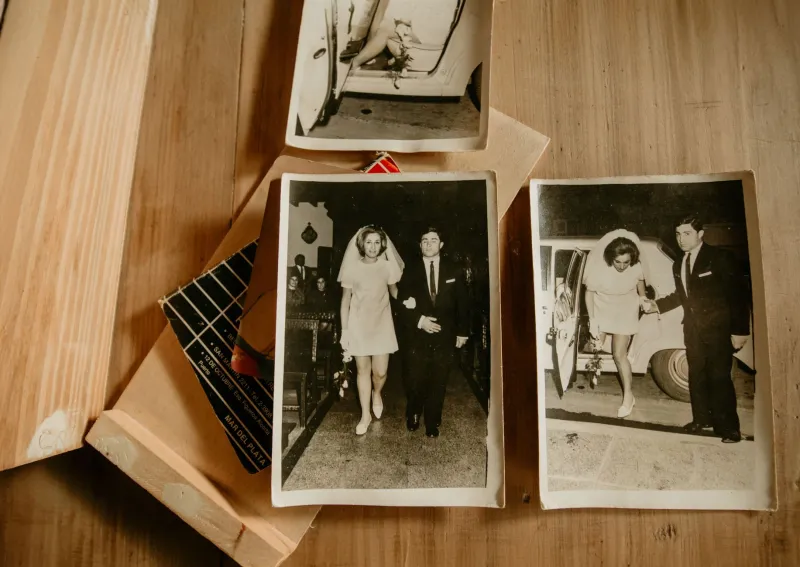
Family photographs are usually described by their faces. We name the people, guess the occasion, and pass the print around. Yet the most revealing evidence is often behind the sitter: a length of wallpaper, the corner of a gas fire, a teapot on a tray, a garden fence with one panel replaced. These are not deliberate records. They are the accidental furniture of the image, and they make the family snapshot a kind of social history.
In the work of this archive, I have come to treat photographs less as likenesses than as rooms that happened to contain people. The pose is planned; the room is not. That distinction is useful. It asks us to look past the central subject and towards the edges, where ordinary life left its traces.
Why the Background Deserves Attention
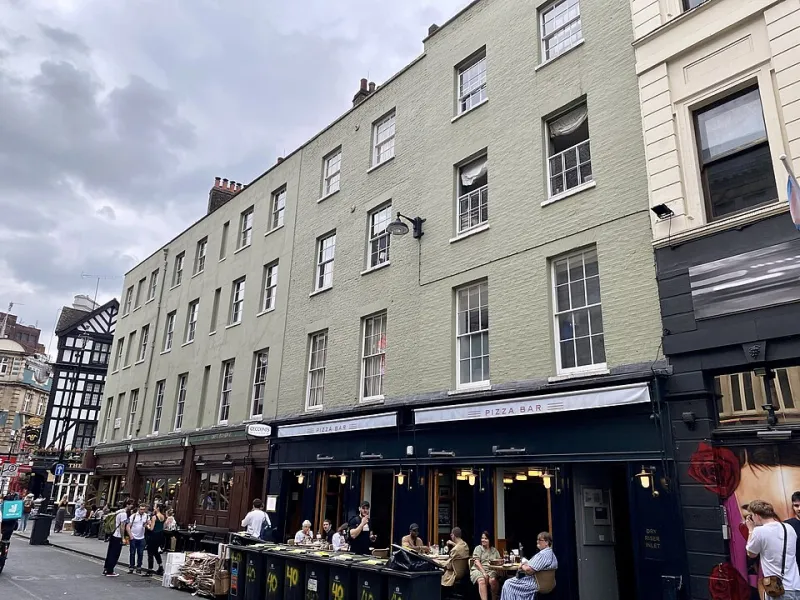
A photograph taken in a front room in the 1950s or 1960s may tell us very little about the sitter's character. It may tell us a great deal about the wallpaper, the three-piece suite, the net curtains, the sideboard and the ornaments. In the UK, the background often carries clues about tenure and place: pebbledash or brick, a council estate or a terrace, a shopfront with a painted fascia, a church-hall noticeboard, a garage forecourt. None of these is proof of anything on its own. Together, they form a texture.
The background also records change. A garden fence can show a neighbouring building that no longer exists. A kitchen can show a cooker before and after replacement. A shopfront can preserve a family business name that has vanished from the high street. These details are not the sort of thing that official records tend to keep. They are the small, unglamorous facts that make a local history legible.
Prompts for Looking at the Edges
When examining a family photograph, it helps to move through the image in a fixed order. Begin with the room or place, then the surfaces, then the objects, then the outside view. The following prompts are deliberately plain:
- What is on the walls? Note wallpaper pattern, paint colour, tiles, pictures, clocks and calendars.
- What is on the floor? Carpet, lino, rugs and thresholds can suggest date and use.
- What is on the table or sideboard? Crockery, bottles, newspapers, letters and ornaments are often dateable.
- What is outside the window or door? Fences, walls, trees, street furniture and neighbouring buildings are place clues.
- What is worn or repaired? A mended chair, a patched fence or a chipped jug can say more than a new object.
- What is absent? The missing television, the uncurtained window or the bare garden may be as informative as what is present.
These prompts are not a test. They are a way of slowing the eye. The aim is not to date every object precisely, but to notice what the photograph has preserved without intending to.
The Limits of Inference
There is a danger in treating background detail as certainty. Wallpaper can remain in a room for decades. A piece of furniture can be inherited. A shopfront can be photographed long after it changed hands. The prudent approach is to record observations separately from conclusions. Write down what you see before you decide what it means. Where possible, corroborate with other photographs, family memory, trade directories, local maps or building records. The archive is strongest when it distinguishes evidence from interpretation.
An Edge-First Annotation Method for 2026
The method I suggest is modest enough to be done in an afternoon, and repeatable enough to be kept up. For each photograph, create a record with the following fields:
- Reference number and storage location.
- Foreground: names, if known, and the apparent occasion.
- Background: room, building or outdoor setting.
- Objects: a short list of visible furnishings, crockery, tools or signs.
- Place clues: street names, shop names, architectural features, landscape details.
- Date clues: calendars, newspapers, clothing, technology, wallpaper or vehicle details.
- Questions: what remains uncertain and who might know.
- Custodian: who holds the original and who has been consulted.
This can be kept in a spreadsheet, a notebook or a set of index cards. The important point is that the background is annotated while the photograph is still in front of you. In 2026, a digital copy can sit alongside the paper record, but the annotation should not be left to the image alone. A scan preserves the pixels; a note preserves the act of looking.
A Social History in Small Things
The family photograph is not a neutral document. It was made to remember a person or an occasion, and it carries all the compromises of that purpose. But it also carries the room, the street and the ordinary objects that surrounded the sitter. To read those edges is to recover a little of the life around the face. It is not the whole story, and it is not always a comfortable one, but it is a story that would otherwise go unrecorded.