The Card That Kept Time: A Library Ticket as a Civic Diary
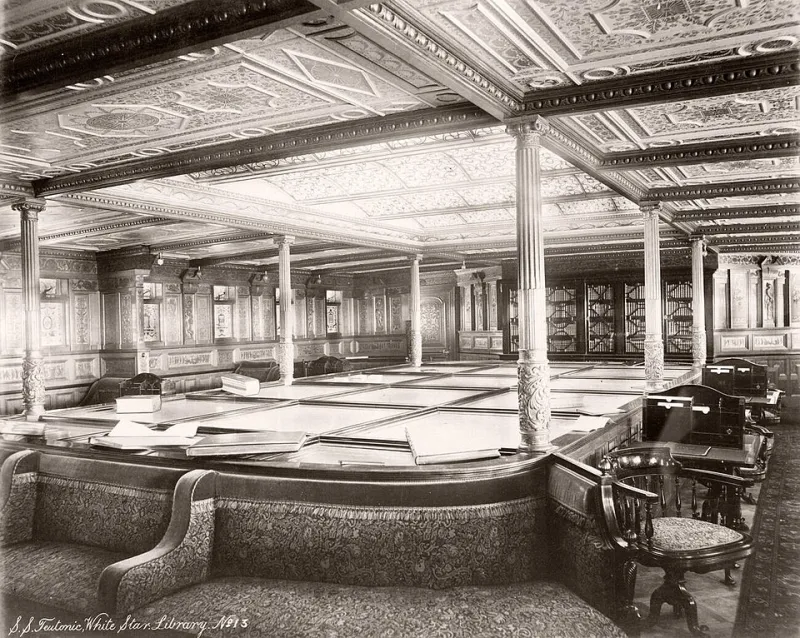
Photo: Unknown authorUnknown author, Public domain, via Wikimedia Commons
The ticket was not kept deliberately. It was found in a wallet among receipts, a dry-cleaning stub and a bank card that had long since been replaced. It is a small rectangle of card, once stiff, now softened at the corners, with a grid of dates stamped in violet ink. The name of the library is printed at the top, the borrower’s number is typed below, and the stamps run in uneven columns across the back. As an archival object it is modest to the point of anonymity. As evidence of a reader’s life, it is unexpectedly rich.
The Object and Its Wounds
The first thing to note is the wear. A library ticket is handled far more often than its blank appearance suggests. It is taken out at the counter, slipped into a machine or handed to a librarian, then returned to a wallet or purse. The corners fur at the same rate as a favourite recipe card. The surface acquires a faint polish from thumbs. In this example, the lamination has begun to lift along one edge, and a diagonal crease runs from the top right corner towards the centre, as if the card had been kept in a back pocket and sat upon. These are not decorative details. They are a record of use, and use is the archive’s real subject.
The printed fields are equally telling. There is a branch code, a borrower number, and a grid of boxes intended for date stamps. Some boxes are empty. Others carry dates in quick succession, then a gap of several months. One stamp is faint, perhaps because the ink pad was running dry. A handwritten renewal, in pencil, has been added in the margin. None of this tells us which books were borrowed. It tells us when the borrower came, how often, and for how long the card remained in service.
A Pattern of Dates
Read as a sequence, the stamps form a rhythm. There are clusters in late autumn and early spring, the seasons when a reading habit often returns indoors. There are absences in summer, though not every summer. One interval of nearly a year suggests a move, an illness, or simply a lapse that was later repaired. The renewals are perhaps the most human marks on the card: a reader who wanted to keep a book a little longer, or who had not quite finished it, or who was not ready to admit that they might not finish it at all. The ticket does not judge. It simply notes the extension.
This is the peculiar value of such a document. It records routine without describing its content. We cannot know whether the borrower was reading detective novels, local history, gardening manuals or books about the care of ageing parents. But we can see that they kept coming back. In an age that tends to treat reading as a private, even solitary, pleasure, the ticket reminds us that borrowing is also a civic act. It involves a building, a counter, a staff member, a opening time and a return date. The stamps are the punctuation of that relationship.
Branch Codes and the Geography of a Life
The branch code is a small piece of local geography. In a larger city, it might point to a library that has since closed or been merged into a central service. In a county, it might indicate a market town branch or a mobile library stop. The ticket in question carries only one code, but other tickets in other wallets would carry several. A change of code can mark a house move, a new job, a shift in family circumstances. It can also mark a change in public provision: a branch reduced in hours, a service relocated, a building repurposed.
The history of UK public libraries is full of such adjustments. The Public Libraries and Museums Act 1964 established a statutory duty to provide a comprehensive and efficient service, but the shape of that service has always been local. Closure programmes, volunteer-run libraries, co-located services and digital lending have all altered the map. A date stamp cannot explain these changes, but it can sit alongside them. It is a fragment of evidence that a particular person used a particular service at a particular time. That is the kind of detail that official records often smooth away.
Renewals, Fines and the Administration of Hope
There is a temptation to read the ticket as a story of virtue: the reliable borrower, the returned book, the fine avoided. But the document is more interesting than that. The gaps are as eloquent as the clusters. A long silence might indicate a reader who moved away, or one who found the library less accessible after a change in opening hours. A renewal might indicate enthusiasm or mere forgetfulness. The ticket does not distinguish between the two.
What it does show is a relationship with an institution that was designed to be forgiving. Libraries lend, renew, reserve and reclaim. They impose fines, though many services have softened or abolished them in recent years. They keep records, but not usually for the borrower’s benefit. The ticket is a small administrative object, and like all such objects it carries a trace of hope: the hope that the book will come back, that the reader will return, that the service will continue.
What the Digital Record Cannot Show
In 2026, borrowing histories are increasingly digital. A reader may log in, reserve a title, renew it online and never see a stamped card at all. This is convenient, and it is also private. Digital records can be deleted, anonymised or retained only for a short period. They are not usually designed as archives of civic life. The result is that the accidental evidence of the wallet ticket – the crease, the faded stamp, the pencil renewal – is becoming rarer.
There are good reasons for this. Borrowing histories can reveal sensitive information about health, belief or family life. Privacy matters. But the loss is real. A future historian of reading, or of local government, or of everyday routine, will find fewer of these small, stubborn documents. The digital trace may be more comprehensive in aggregate, but it is less likely to survive in a drawer, and less likely to be read by anyone who was not looking for it.
A Small Discipline
The ticket in the wallet is not a grand archive. It is a fragment, and it should be treated as one. It cannot tell us what was read, only that reading was part of a life. It cannot explain the gaps, only that they occurred. But it can remind us to look at the ordinary documents we still keep: the card, the receipt, the renewal slip, the date stamp. They are not important because they are rare. They are important because they are evidence of a habit, and habits are how a life is made.