Rows of Beans, Lines of Evidence: Reading an Allotment Society Minute Book
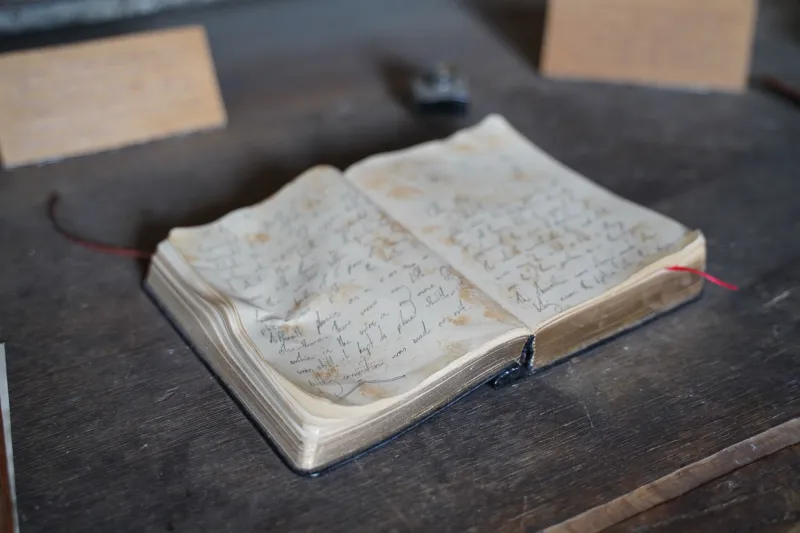
Allotment societies are often judged by what they grow. The minute book suggests they should also be judged by what they record. A hard-backed notebook, kept beside the kettle in a communal shed, can document a vegetable patch with more precision than any photograph. It catches the decisions that make cultivation possible: who ordered the onion sets, when the water butt was repaired, why the hedge was cut back before the summer fete. In 2026, when many associations are run by small committees and short messages, such volumes are quietly disappearing.
A Committee in a Cardboard Box
The first impression is usually one of ordinariness. The minutes begin with apologies for absence, approve the previous record, and move to correspondence. The handwriting may be cramped or generous; the ink may fade from blue to grey. Yet the ordinary is precisely the point. These pages show a form of local governance that rarely appears in official archives: tenants and plot-holders managing land, money and each other with little ceremony and considerable patience.
I have seen minute books that read like a ledger of small disputes and smaller reconciliations. A complaint about a shed roof becomes a note on shared responsibility. A request for a raised bed becomes a discussion about access. Such entries are not merely administrative. They reveal how a community negotiates fairness when the stakes are modest but the feelings are not.
The Seed Order as Social Weather
Among the most revealing entries are the seed orders. A society's bulk order is a practical arrangement, but it is also a statement of taste and expectation. One year the list may lean towards potatoes and brassicas; another may show more courgettes, chillies or cut flowers. These shifts can reflect fashion, migration, changing household budgets or simply the persuasion of a catalogue. Read across a decade, the order forms become a rough index of what people hoped to eat and what they believed would grow.
The minutes rarely explain the reasons. That is their limitation and their strength. They give us the decision without the interview. The archive-minded reader learns to treat the seed list as evidence rather than anecdote: a record of supply, preference and the quiet optimism that accompanies every packet of seed.
Inspections, Sheds and the Grammar of Fairness
Plot inspections produce some of the most human passages. A note that a plot was 'satisfactorily cultivated' is not just a tick-box. It is a judgment about time, labour and respect for neighbours. Shed disputes are similar. The minute book records the complaint, the visit, the compromise. Often the resolution is mundane: a boundary moved by a foot, a hedge trimmed, a lock replaced. Yet the language used matters. A committee that writes carefully about a tenant's difficulties is also writing a small treatise on neighbourliness.
For anyone researching local food habits, these entries offer something that cookbooks cannot. They show the social conditions under which food is grown: the rent arrears, the volunteer work days, the rules about bonfires. The allotment minute book is not a pastoral idyll. It is a working document, and its practical tone is what makes it trustworthy.
Weather Written Sideways
The weather appears indirectly. A meeting is cancelled because of snow. A hosepipe ban is noted. A shed is damaged in a gale. A summer is remembered as dry, or a spring as late. These remarks are rarely systematic, but they are local and dated. For climate historians, such scattered observations are not substitutes for meteorological records. They are something else: evidence of how weather was experienced by people trying to bring in a crop.
A minute book may note that the water supply failed in July, or that a plot was waterlogged until March. Those details place national weather stories in a particular place. They remind us that climate change is not only a set of averages but a sequence of small disruptions in ordinary routines.
Raffles, Rents and the Small Economy
The treasurer's report can seem dry until one reads it as social history. Raffle proceeds, rent totals, the cost of manure, the price of a new mower: these figures trace a small economy. They show what a community was willing to spend and what it could afford. They also show generosity. A collection for a member's family, a donation to a local charity, a reduced rent for a plot-holder in difficulty: all can sit beside the annual accounts.
Such entries are useful to local historians because they connect the allotment to the wider neighbourhood. The society buys from a local supplier, hires a village hall, or sends a donation to the parish. The minute book becomes a map of obligation.
What to Do Before the Book Goes Missing
The practical lesson is urgent. Club and society papers are often kept in a member's loft, in a plastic bag, or in a shed vulnerable to damp. They are rarely catalogued. If an association has old minute books, the first step is to bring them into a dry, secure place and list them by date. Paper clips and rubber bands should be removed; loose pages should be placed in acid-free folders. A simple digital copy, made with a phone or flatbed scanner, is better than nothing, provided the images are named consistently and stored in more than one place.
The second step is consent. Minutes may contain personal details, disputes and financial information. An archive need not publish everything to preserve it. A local record office, library or county archive service can advise on deposit and access. The aim is not to expose a community's private business but to keep its evidence available for legitimate research.
The Value of the Unremarkable
A vegetable patch remembers through its soil, its beds and its tools. It also remembers through the minutes that recorded how it was shared. These books are not glamorous. They are better than glamorous: they are specific. They name the seed, the date, the sum and the disagreement. In a culture that often saves the exceptional and discards the routine, the allotment minute book deserves a second look. Its rows of beans are matched by rows of evidence, and both are worth keeping.