The Drawer of Small Promises: Reading a Home's Appliance Paperwork
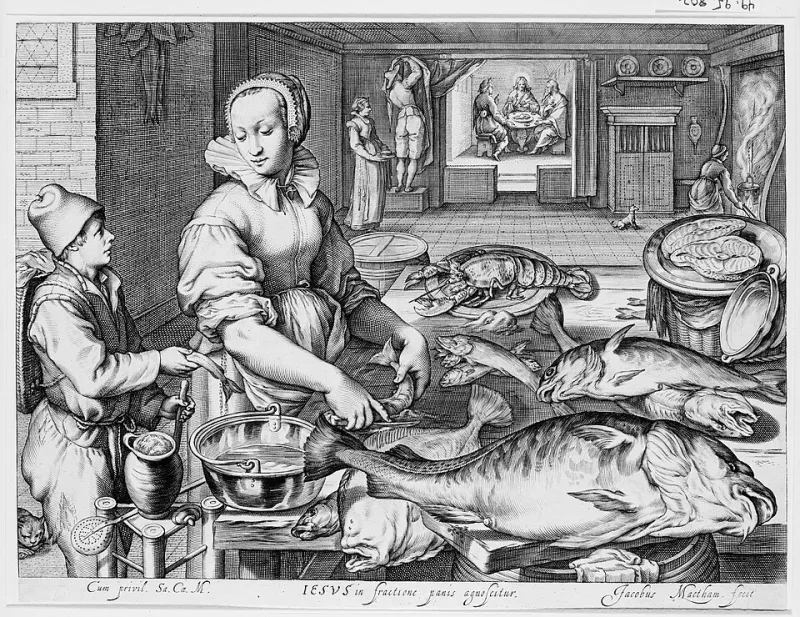
Photo: Jacob Matham, CC0, via Wikimedia Commons
In most British homes there is a drawer that nobody designed as an archive. It may sit beside the oven, under the cutlery tray, or in a loft folder marked with a single word such as paperwork. Inside are manuals for appliances that may no longer exist, warranty cards for items long since replaced, service stickers from engineers, energy labels folded into quarters and receipts that have faded to the colour of weak tea. It is easy to call this clutter. It is more useful to read it as a record.
The guarantee drawer is not a museum. It is a holding pen for promises: promises made by manufacturers, by retailers, by insurers and by householders to themselves. As an archive, it is partial and untidy, but that is true of most archives. Its value lies in what it remembers that photographs and memory tend to miss.
A Drawer with Its Own Logic
The contents of such a drawer are arranged by anxiety rather than chronology. The manual for a washing machine may sit beside a receipt for a kettle because both were once considered worth keeping. A boiler service record may be folded inside a takeaway menu. The drawer has no catalogue, yet it has a rough order: things that might be needed if something goes wrong.
That logic is worth noticing. Photographs record the kitchen as it looked. The guarantee drawer records the kitchen as a system of dependencies. It knows the model number of the fridge, the date the boiler was last examined and the name of the engineer who signed the sticker. It knows that a household is not only a set of rooms but a network of appliances, supplies, warranties and tradespeople.
In a British context, the drawer often carries the marks of particular domestic technologies: the combi boiler, the condenser dryer, the fridge-freezer with its energy label, the small kitchen appliance bought in a January sale. It also carries the marks of consumer habits. Extended warranties, insurance certificates and repair receipts show how a household has chosen to manage risk. A service history for a boiler can read almost like a medical record for the house.
What the Paper Remembers
Manuals and warranty cards are usually thought of as generic documents. In practice they acquire a local character. A manual may be annotated with a fault code. A receipt may be folded around a replacement part. A service sticker may carry a date, a signature and a telephone number. These are small marks, but they show that the paperwork has been used rather than merely stored.
The drawer also remembers money. Receipts can show what was paid and when, though thermal paper often fades beyond legibility. Energy labels can show how running costs were presented at the point of sale. Extended warranty leaflets can show how uncertainty was sold back to the consumer. Taken together, these documents form a modest economic history of a household: not a full budget, but a record of significant purchases and the fears that accompanied them.
In 2026, as debates about repairability and appliance lifespans continue, such paperwork has a wider interest. A service record is evidence of maintenance. A missing record is not proof of neglect, but it is a silence worth noting. The drawer shows that repair is not only a practical act but a documented one. It leaves traces.
The Limits of the Record
It would be a mistake to overread the guarantee drawer. It records only what was kept. Receipts are lost, manuals are discarded, and many small purchases never generate paperwork at all. The drawer also says little about the emotional life of a home. It cannot tell us whether the kitchen was warm, whether the boiler broke down at an inconvenient moment, or whether the purchase of a new fridge was a relief or a burden.
Its silences are part of its character. An archive of warranties is an archive of objects that were expected to fail. It is not a record of everything that mattered. It is a record of what someone thought might need to be proved. That distinction is useful. The drawer is not a biography of a household. It is a file of contingent promises.
Practical Notes: Keep, Digitise, Discard
For those who wish to treat the drawer as an archive rather than a nuisance, a few simple disciplines help.
Keep the paperwork that has continuing value: warranty terms and proof of purchase for high-value appliances, boiler service records, installation certificates, insurance documents and manuals for complex equipment. Keep originals where a retailer, insurer or engineer may require them.
Digitise the details that are most easily lost: model numbers, serial numbers, dates of purchase and service. A photograph of the rating plate and a scanned receipt stored in a dated folder can save considerable time later. Name files clearly, using the appliance and the date. Keep a local copy as well as a cloud copy.
Discard with care. Manuals for appliances no longer owned can usually go, as can marketing material and duplicate leaflets. Before discarding anything, check whether it contains a service date, a model number or a warranty reference that has not been recorded elsewhere. A annual review of the drawer is enough for most households.
What the Drawer Reveals
The guarantee drawer is a small argument for attention. It shows that domestic life is maintained through paperwork as well as through labour. It records the engineer who serviced the boiler, the retailer who supplied the fridge, the manufacturer who offered a guarantee and the householder who kept the receipt. It is a record of trust, however modest.
It also reveals a particular kind of optimism. To keep a warranty is to assume that a thing will last long enough to need one. To file a service record is to assume that the future will ask questions of the past. The drawer is not sentimental, but it is forward-looking in its own way.
Next time the drawer jams, it may be worth reading before emptying. The papers inside will not tell you what the kitchen felt like on a winter morning. They will tell you when the boiler was last examined, which model of fridge once stood against the wall and who was trusted to repair it. That is a modest kind of memory, but it is memory nonetheless.