The Sleeve, the Sequence and the State: Notes on a Passport Photograph Strip
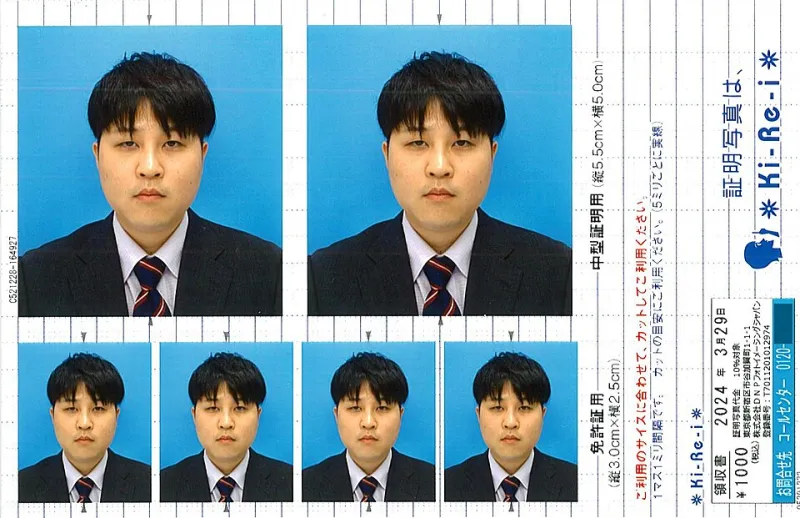
Photo: 8joKeaton, CC BY-SA 4.0, via Wikimedia Commons
In a drawer of household paperwork, between a expired insurance schedule and a bundle of guarantees, a strip of four passport photographs survives in its printed paper sleeve. The images are small, glossy and slightly over-exposed. The sleeve is creased at one corner. Nothing about the object announces importance, yet it belongs to a particular class of document: the kind that records a person preparing to be read by the state. The strip is not a portrait. It is a sequence, and the sequence is the evidence.
The Object and Its Paper Envelope
The physical strip has its own grammar. Four frames sit in a column, separated by perforations or cut lines, each one a near-repeat of the last. The paper has a chemical sheen; the reverse may carry a batch number or a faint watermark. The sleeve is not incidental. It often bears instructions, a booth identifier, a location, sometimes a date stamp applied by the operator. In archive terms, the sleeve is metadata before the word became digital. It tells us where the image was made, under what conditions, and for what purpose.
A loose photograph can be moved, trimmed, framed or mislaid. A strip retains order. Even when the frames look identical, they are not. The first exposure may catch the subject mid-blink; the second shows a slight shift in posture; the third is the one eventually cut out and attached to a form. The remaining frames are the rejected takes, and rejected takes are often more revealing than the chosen image. They record the small adjustments made before official scrutiny: the settlings of the shoulders, the practised neutral expression, the moment the face stops being a face and becomes a compliant likeness.
A Sequence, Not a Portrait
Passport photography is a genre with rules. The background must be plain, the expression neutral, the head uncovered except for religious or medical exemption, the lighting even. The booth translates government guidance into a series of mechanical prompts. The subject sits, adjusts the stool, inserts coins, waits for the flash. The resulting strip is therefore a record of compliance, but it is also a record of hesitation. The four frames show the body before it has settled into the required stillness.
This is why the strip deserves a place in the family archive alongside letters and diaries. It captures a transaction between private life and public record. The chosen frame will travel into a passport, then into border systems, then into the memory of officials. The unchosen frames stay behind, holding the micro-history of the sitting. They are not sentimental, but they are human. A person who has kept a passport photograph strip has kept a small sequence of self-presentation, not merely a spare image.
The Booth as Civic Furniture
For much of the post-war period, the passport photo booth was part of the ordinary furniture of British civic life. It stood in railway stations, post offices, supermarkets and shopping centres. It was a commercial machine, but it performed a quasi-public function. It produced the image that the state required. Its presence on the high street made documentary identity part of the everyday landscape, available for a few pounds between errands.
The booth also had a social history. It was used by people renewing passports, applying for driving licences, completing job applications, obtaining travel documents for children, or assembling papers for settlement and citizenship. The same machine served holidaymakers and applicants, students and pensioners. Its instructions were plain, its lighting unflattering, its output consistent. In that consistency lay its value: the booth reduced the variability of the human face to a format that bureaucracy could accept.
As of 2026, the digital photograph has become the default in many online applications. The booth has adapted by issuing a photo code, a string of characters that links a customer to a licensed digital image. The code is efficient, but it is not an object. It cannot be kept in a sleeve, annotated on the reverse, or found in a drawer twenty years later. The high-street booth is not yet extinct, but its role as an accidental registrar is diminishing.
Addresses, Numbers and the Paper Trail
A passport photograph strip rarely travels alone. It is usually accompanied by other paper: a renewal notice, an application form, a countersigned declaration, a receipt, an old passport returned with a corner clipped. These adjacent documents give the strip its provenance. Without them, the image is weak evidence. With them, it becomes part of a chain that can be dated and located.
The sleeve may carry the name of a shop or a booth operator. It may show a branch address or a machine number. These details matter to the archive because they place the object in a particular high street at a particular moment. They also reveal how documentary identity was commercialised: the state set the standard, but private machines produced the image. The paper trail is therefore not bureaucratic clutter. It is the context that turns a photograph into a record.
What the Digital Code Cannot Keep
Digital photography has clear advantages. It reduces waste, allows instant correction, and makes submission easier for people who cannot easily travel to a booth. But the digital code is ephemeral. It is designed to move an image from a booth to an application, not to preserve the sequence of exposures or the material history of the sitting. The code may expire. The image may be retained by the operator for a limited period. The applicant may never see the rejected frames.
For the family archive, this is a real loss, though not a catastrophic one. The passport itself remains, and the application record may survive in official files. But the strip had a particular quality: it showed the process rather than only the product. It recorded the paper, the perforations, the sleeve, the fading, the handling. Those are not merely aesthetic details. They are evidence of how identity documents were made and kept in ordinary life.
A Small Discipline for the Family Archive
The practical response is modest. If a strip survives, keep it with its sleeve. Do not cut the frames apart. Label the sleeve, or an accompanying acid-free envelope, with any known date, place and purpose. Scan the strip at high resolution, including the reverse and the sleeve, and store the digital copy with a note on where the original was found. Cross-reference it with passport dates, renewal letters and other application papers. Treat it as a document, not as a spare portrait.
These are small disciplines, but they are the ones that allow an archive to speak. The strip in the drawer is not a grand historical source. It is a minor object, easily discarded. Yet it holds a sequence of four exposures, a paper sleeve, and the faint trace of a person preparing to be counted. In 2026, as the booth becomes less familiar, that trace becomes more eloquent. It is not nostalgia. It is evidence.